April 20, 2008

Recipe: Migas in the Morning

I first had this Tex-Mex take on scrambled eggs at a family reunion in Corpus Christi, and I've been experimenting with it ever since.


The version I like best so far uses most of the traditional ingredients plus a dash of cumin for smokiness. I also prefer my migas with the tortilla pieces a little crunchy, but there's a way to cook them up soft if that's what you prefer. Here's my recipe for a quick two-person plate.

Ingredients

• 2 tablespoons minced red onion
• 1/2 a green chili, minced (this can be adjusted depending on your heat tolerance)
• 1 garlic clove, minced
• 1/2 a roma tomato, diced
• 1/2 teaspoon cumin powder
• 1 tablespoon oil
• 2 corn tortillas, cut or torn into bite-size pieces
• 3 eggs, beaten

Directions

• Heat the oil over medium heat in a nonstick skillet.
• Add the tortilla pieces to the pan and toss to coat. Cook the pieces until they get puffy and are just turning golden.*
• Add the onion, garlic, chili, and cumin. Cook until the onion starts to brown.
• Lower the heat to almost a simmer. Add the tomato and stir for 30 seconds.
• Add the beaten eggs. Scramble until the eggs look almost done then remove immediately to serving dishes. Do not overcook the eggs, or they will get rubbery.

Top with grated cheese and/or fresh chopped cilantro if desired. This goes great with a side of guacamole and some fresh fruit.

* For softer tortilla pieces, only cook them in the oil until they are heated through, then add the tomato along with the other veggies.

April 15, 2008

Indiana Jones and the Crystal Hoax

I have to admit the movie snob in me has been avoiding at all costs any talk of the latest Indy installment, Indiana Jones and the Kingdom of the Crystal Skull. Harrison Ford at 66? And that annoying kid from Transformers??? Pass.

But that was until some friends got into a discussion in my vicinity about what the titular crystal skull is supposed to be and why the ever-present Nazis would want to get their hands on it. So I did a quick Google search and right at the top of the hit list popped a very familiar picture:


Not two feet away from my screen sat the very same picture, a postcard from the British Museum I've had somewhere on a wall near me since 1996. Turns out the crystal skull in question is the same museum artifact I had admired as a teenager. According to the fine print on the back of the card, copyright 1988, the object is a

Skull of rock crystal. Mexico. Probably Aztec.
c.AD1300-1500. The style of this piece suggests that it dates from the Aztec period. If, however, as one line of the carving suggests, a jeweller's wheel was used to make the cut, the piece would date from after the Spanish Conquest.


The museum acquired the shiny crystal noggin in 1897 from Tiffany & Co. via a French art dealer.

In the 1940s the first of such skulls took the world by storm when Brit banker F.A. Mitchell-Hedges announced that his adopted daughter Anna had found the crystal skull tucked under a Mayan temple in the jungles of Belize in 1920. He called it the "Skull of Doom" and claimed it had supernatural powers.

"According to [Mitchell-Hedges], it had been made 3,600 years ago. Mayan priests wielded it to invoke gods and devils. Its curse could bring misfortune and death," the Smithsonian Institution, which now owns the mystical relic, reports on its website.


Well, almost.

Actually the skulls are a huge hoax. Researchers at the Smithsonian estimate that the artifacts could not have been made any earlier than the 19th century based on craftsmanship—and the fact that no such skull has ever been credibly excavated from an authentic pre-Columbian site.

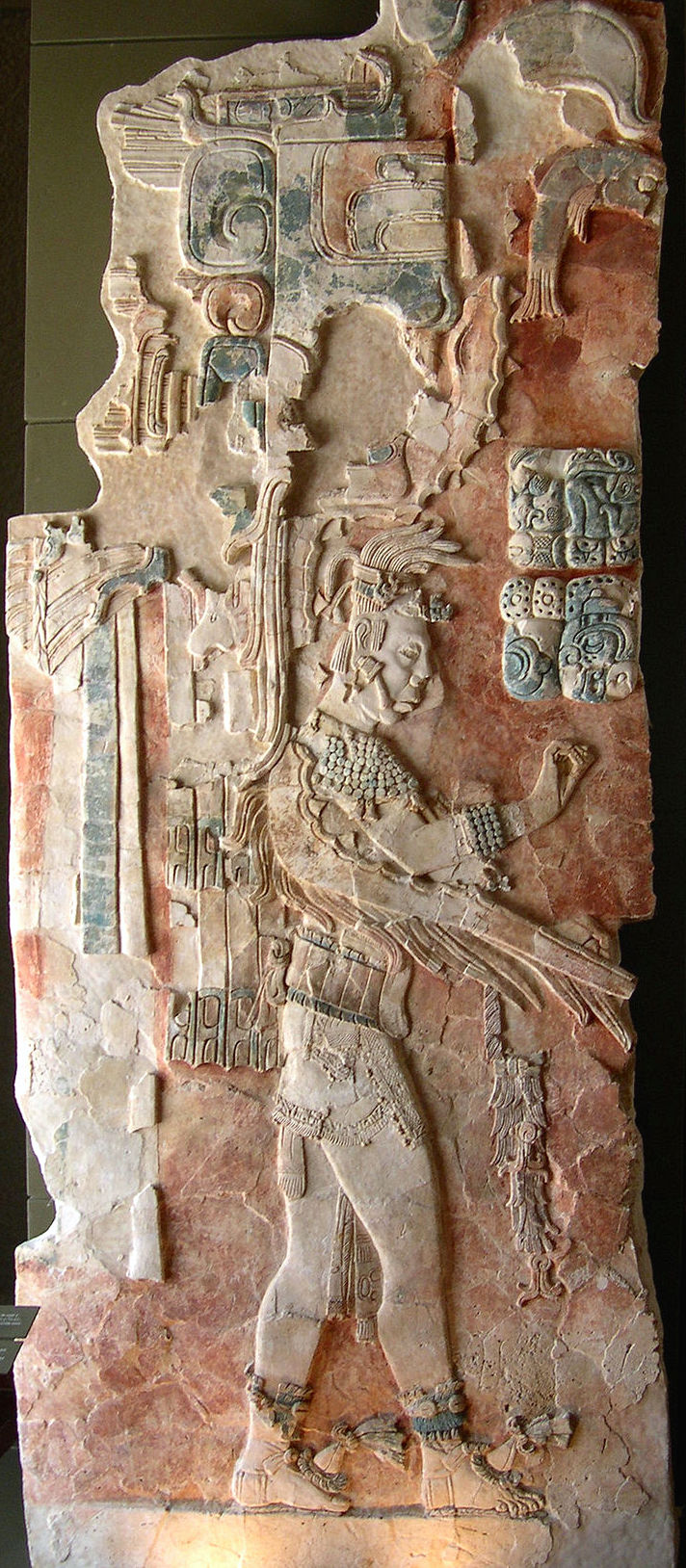
—A painted stucco relief in the museum at Palenque, a Maya ruin in Chiapas, Mexico, from one of the recently excavated buildings. A facsimile stands at the original location.
Photo © 2004 Jacob Rus


Smithsonian experts used scanning electron microscopes to reveal that their skull and two others over at the British Museum showed absolutely no signs of ancient Aztec or Mayan tool work.

“We discovered that all of the crystal skulls had been carved with modern coated lapidary wheels using industrial diamonds and polished with modern machinery,” Jane Walsh, an anthropologist at the Smithsonian’s National Museum of Natural History, said in an online article.

Of course that has not stopped many New Age believers from insisting that the skulls are not only genuine, but magical. A crystal skull has healing properties, it can show you the future, it can talk, it's an alien supercomputer.

And that's where Indy comes in, although this time the Nazis are out. It's 1957, and Soviet agents plan to use the powers of the crystal skulls to do, uh, Soviet things. So our older and wiser hero enters the fray, sullen love interest and whiny sidekick in tow.

I don't think I need a mystical crystal skull to tell me that this flick will be tragic. But then Spielberg and Lucas will surely be grinning evilly all the way to the bank.

April 9, 2008

Got Botox in Your Brain?


Okay, unlike past jokes about the sheer inanity of injecting a deadly toxin into your skin just to look younger, scientists in Italy have released some pretty serious research showing that yes, in fact, it could be a bad idea.

A new study in The Journal of Neuroscience finds that injected botulinum toxin, the key ingredient in Botox, can get transported across the membranes of muscle cells and into nearby terminals that send signals from nerves to the brain.

After injecting the toxin into the muscles around rats' whiskers, the study team saw its effects in the so-called facial nucleus, a cluster of neurons in the brain that is linked to the main nerve in the face. This would suggest that despite previous belief, botulinum may be a long-distance traveler, which would have very real implications for Botox users.

In case you had not heard, botulinum is a neurotoxin that is described by some experts as the most toxic protein known. The Wikipedia entry for botulinum morbidly notes that in theory, a few hundred grams could kill everyone on Earth.


The toxin is produced by bacteria and, when consumed, can lead to pretty severe food poisoning. According to the FDA, even tiny amounts of botulinum can induce weakness, paralysis, fatigue, dry mouth, and trouble swallowing.

To be fair, botulinum has its place in the pantheon of dangerous substances that can treat diseases: The drug has been used since the 1950s to combat ailments ranging from migraines to spastic disorders to excessive sweating. Botox wasn't approved by the FDA for cosmetic use until 2002, but it's quickly become one of the more common treatments among people seeking to fight the appearance of fine lines and wrinkles.

So far Botox has been used with an assumption of safety, because the toxin is supposed to be localized at the injection site—it targets only the wrinkley bits and doesn't go traveling to other parts of the body.

The latest findings mean that the toxin could get into your brain, where it messes with a protein known as SNAP 25 that controls the release of neurotransmitters, chemicals that relay information from the brain to the rest of the body. Breaking apart SNAP 25 in the brain leads to paralysis.


The timing of this study's release is apropos, because in February the FDA announced a full-on safety review for Botox and one of its medicinal cousins, Myobloc, after at least 16 people died following injections.

While real people suffering from debilitating diseases might still consider botulinum treatments, I can only hope those seeking it for pure vanity might now think twice. Want my advice? Go read the Picture of Dorian Gray instead, and then go out and enjoy life.